Housing Options for Aging Parents and Adult Kids at Home
Part 1 of 2: The menu and what to think about

Another weekend of open houses came and went, and the same conversation kept finding me. Mostly with people my age, standing in the kitchen of a four-bedroom house, looking thoughtful. Not asking about schools or commutes. Asking, in one way or another, what to do with their parents. They are asking me because the house is almost always at the center of the answer.
This is what the demographers call the Sandwich Generation. People caring for aging parents and supporting adult kids at the same time, often while still working full-time. For Gen X, the math has shifted hard enough that what used to be cultural is now financial.
The headlines lately have made it sound easy. Washington opened the door on accessory dwelling units, loosened the rules on splitting properties, and now anyone with a yard can build a backyard cottage and solve the multi-generational question in eight months and a permit application. That door is real. But the door is the easy part. The harder part is figuring out which kind of structure actually fits your family, your property, and the next twenty years.
This is Part 1 of two. Today, the menu of options and what to think about across all of them. Next time, what each one actually costs and who is doing this well in our area.
The numbers nobody wants to face
Long-term care has gotten brutal. Assisted living in the Seattle area is hard to find under seven or eight thousand a month, and that is for a basic unit with limited care. Add a one-bedroom and a real care plan and you are quickly past ten thousand. Memory care and skilled nursing can run thirty to forty thousand. The average length of stay is about twenty-two months. Run the math forward and a moderately-priced placement is a quarter million dollars, and that number rises every year.
That is the engine driving the conversations I am having. People are not getting creative because they want to. They are getting creative because the math at the other end will erase a lifetime of savings in a few years, and the people writing the checks are the same people whose own retirement math is already tight.
Adult kids are bouncing between the rental market and their old bedroom because a starter home is starting to look like a luxury good. Parents are slipping, in ways that are not dramatic yet but will not stay that way. The pressure is real. The math is real. The question is what to do about it.
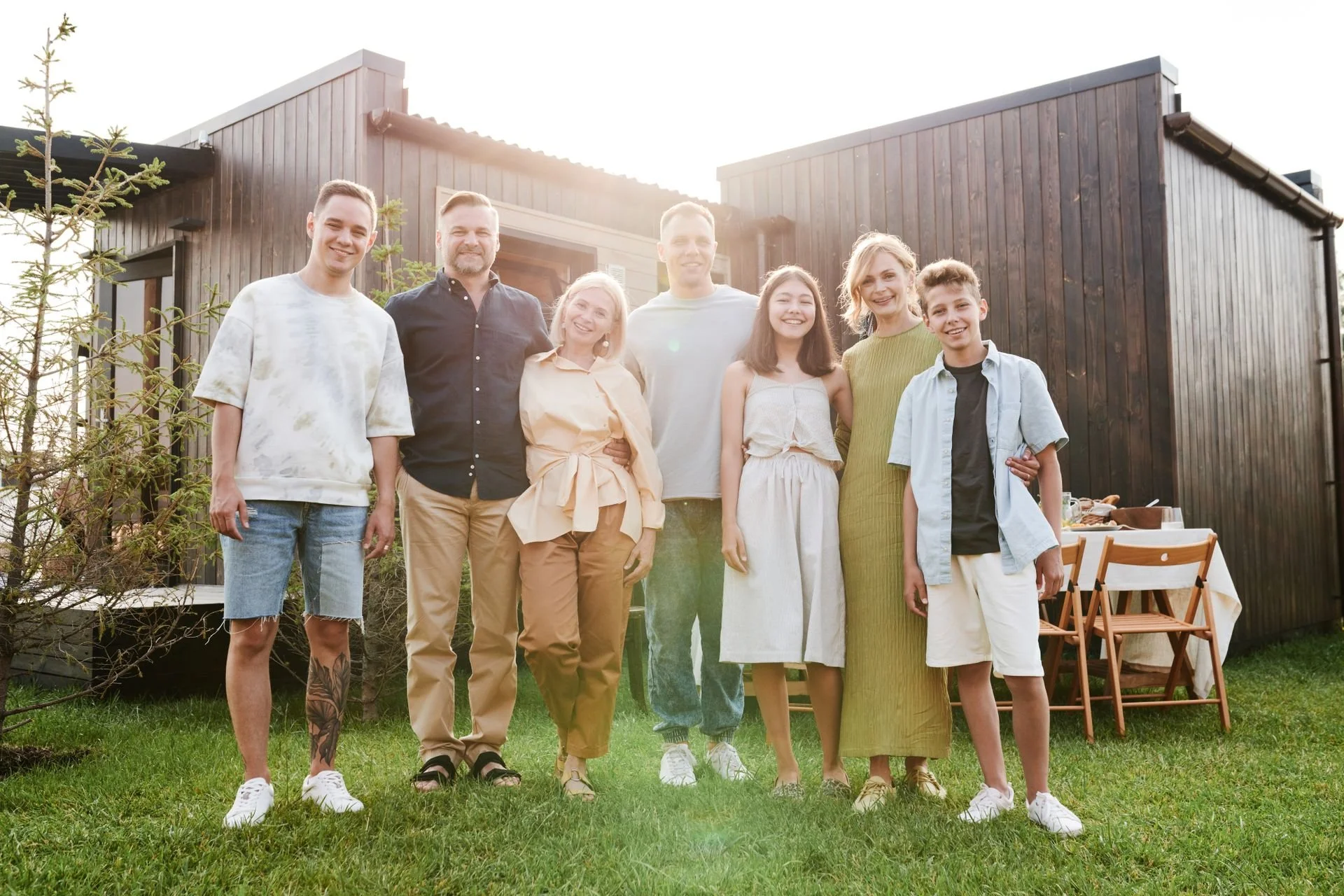
The five options on the table
There is no single right answer here. There are five structural paths that families in our area are actually using, and each one fits a different combination of property, budget, and circumstance. Here is the menu.
1. The tiny house on a trailer frame. The lightest path. Park model RVs and similar units built on a trailer chassis, titled as personal property rather than real property. Quick to deploy, lower cost, lighter regulatory load. The catches are real. Under Washington law these are not full-time rentals, occupancy is restricted to owners and family, and the unit does not add to your home's assessed value the way real-property construction does. Good for a short-term landing pad or a family-only solution. Not the answer if you want a long-term asset or rental income.
2. The stick-built ADU or DADU. The backyard cottage built to full residential code. Real property, full utility hookups, and now legally splittable into a separately-owned unit if you want to take that path. Highest cost of the options. Most flexibility once it is in. Good for long-term solutions, families who want the option to sell the cottage someday, or owners who want to build equity in the second structure. The cost surprises live on the utility side. More on that next time.
3. The barndominium. Snohomish County still has the lots for this. A barndominium is a barn-style structure with finished living space inside, typically wood-framed in our area, often two stories, with shop or storage below and living above. Plenty of room for parents who have a lifetime of stuff. Good ceiling height. Real flexibility, because the lower level can be used for something else if the family configuration changes. The catch is the stairs. Living upstairs works fine until mobility shifts, and then it does not. Worth thinking about long before you sign the framing contract.
4. The single-story rambler. Either buying one or modifying the one you have. This is the option that ages the best. No stairs. Walker and wheelchair accessible with the right modifications. Wider doorways, zero-threshold showers, lever handles instead of knobs. If the long-term plan involves a parent who is already slipping, or who is going to be, the rambler is the structure that does not fight you in five years. The market reality is that ramblers in good condition are hard to find around here, and they fetch a premium when they show up. Many have been flipped poorly, with cosmetic updates papering over real problems. The older ones tend to have low ceilings and the original popcorn texture, which often contains asbestos. Get any popcorn tested before any renovation that would disturb it.
5. The classic mother-in-law plan. The attached suite. A bedroom, a bathroom, sometimes a small kitchenette, all under the same roof as the main house. Lowest cost of the structural options because you are not building from scratch and you are sharing utilities. The catch is honest. It is close. Sometimes that is exactly what you need. Sometimes the proximity is the problem. Family dynamics that worked at a distance can get loud at thirty feet.
What to think about across all of them
Five different structures, but a few considerations cut across all of them.
Stairs and accessibility. Worth its own paragraph because it is the thing that decides whether a structure works for ten years or twenty. Handrails, ramps, zero-threshold showers, doorways wide enough for a walker. All of it can be retrofit, but it is cheaper and easier to plan for at the build stage. Stairs become a problem long before anyone wants to admit it. Plan for the version of your parent who is ten years older than the one you are building for now.
Proximity to medical care. The endless schedule of appointments, specialists, follow-ups, and drives to the lab adds up fast. A beautiful structure on twelve acres outside Snohomish that puts you ninety minutes from the specialist your parent sees twice a week is not the solution you thought it was. Location matters as much as structure.
Emotional dynamics. Moving family closer does not undo the history. Whatever drove distance between people stays in the room when proximity returns, and sometimes proximity makes it louder rather than softer. The hope of repair is real and worth holding. The risk of revealing how unhealed something was is real too. Go in with both possibilities open. The structure is just a structure. What lives inside it is a relationship, and the relationship comes with everything it has always had.
Three things to do before you decide
I have done a version of this with my own family. I am not going to walk you through what happened, partly because it is not only my story to share, and partly because every family's version is different enough that my specifics would not actually help you. What does help is the wisdom that comes out the other side.
Three things, and all three of them are conversations to have before any structural decision gets made.
First, talk to other families who have done it. Not contractors. Not realtors. Not the people selling you the cottage or the barn. Families. Two or three honest hours with people who have lived through this will tell you more than anything I can write. Ask the questions you are nervous to ask. Listen for what they did not expect.
Second, you will need to discuss the stuff. Not the meaningful things. Those will sort themselves out. The other stuff is where the conversation gets practical. Moving it costs money. Hauling it off at the other end costs more. Selling it piece by piece costs hours you do not get back. Donating before the move is almost always the cheapest path on every axis. A storage unit is sometimes a waste of money, sometimes worth it to save a fight or at least delay one. And sometimes the right answer is to spend more on a larger structure that can hold what stays. In our case, the answer on letting go of most of it was no, which is part of how what started as a smaller-structure conversation became a barn house with up-and-down living. That conversation is going to happen one way or another. Better at the kitchen table than at the curb with a moving truck and a deadline.
Third, meet with an estate planning attorney before you build. Trusts, living wills, durable powers of attorney, healthcare directives. The legal infrastructure is easier to put in place while everyone is healthy and clear-headed. POA is much harder to discuss as things decline. So are passwords, online accounts, automatic payments, retirement accounts, insurance policies, and the dozens of small private financial routines our parents have kept to themselves for decades. All of that will, at some point, become your job. Knowing where it lives now is much easier than reconstructing it later.
None of these conversations are easy. All of them are easier than the alternative.
How I would think about it
The right structure depends on what you are actually trying to solve.
If you have a real pressure (an aging parent, an adult kid who needs landing space, a family configuration that is going to keep shifting) and the financial cushion to absorb a fifteen to twenty percent cost overrun, one of these five options can be a very good move. Convenience and proximity are worth something the spreadsheet cannot fully price.
If you are counting on rental income to make the math pencil, walk slowly. The cost surprises live on the utility side and they eat thin margins. More on that in the next piece.
If you are thinking about it as part of a long-term plan (estate planning, eventual condominium split, providing for kids who may inherit the property) the upside gets more interesting. That is a longer conversation worth having with the right team around you.
This is the kind of decision I help clients work through. Not the construction. Not the care plan. The property side, which is the piece that determines whether anything else actually fits. Whether to stay and build. Whether to sell and move closer to family. Whether to buy something that already has the right setup. Whether to modify what you have. The right answer is different for every family, but the conversation is what helps you find it.
You can only prepare for what you know. Some of what comes with this decision will surprise you no matter how carefully you planned. That is not an argument against doing it. It is an argument for doing it with your eyes open and someone in your corner who has walked through a few of these.
What comes next
Next time, the practical side. What each of the five options actually costs in our area. Where the real surprises hide, which has more to do with utility districts than with city permit offices. The builders and specialists who have been doing this well, and the ones I send clients to when the question lands on my desk. The structural piece of the conversation, with real numbers.
If you are working through this decision right now, the property side is where I can help. I do not build the cottage. I do not write the care plan. I do not pick the lender. What I do is sit on the property side of the conversation with you, run real numbers on real options, and connect you with the builders, financing specialists, and aging-care professionals who have done this well for other families. The first call costs nothing and usually saves more time than it takes.
Call or text: 425.492.6788